Pelvic health matters: the essentials every woman deserves to know
I recently attended a pelvic health study day at my old place of work, University of Bristol. While a trip to the cadaveric specimens in the anatomy labs with former colleagues and leaders in the field isn’t everyone’s cup of tea, I think there’s no better way to really understand the anatomy and mechanics of the pelvis. Here are some gems I picked up at the study day to help you stop leaking and pain or help prevent problems.
The basics: What is the pelvic floor?
The term refers to the connective tissues and muscles that sit under the pelvis, quite literally stopping the pelvic organs from falling out and providing openings - in the case of women, 3 openings - at the vagina, urethra and anus. Alongside being integral to the bowel and bladder control, physical intimacy and the birth process, it helps regulate intra abdominal pressure which is the internal pressure created by daily activities e.g. standing, lifting, as well as those needing quick reactive control, like hopping and coughing.
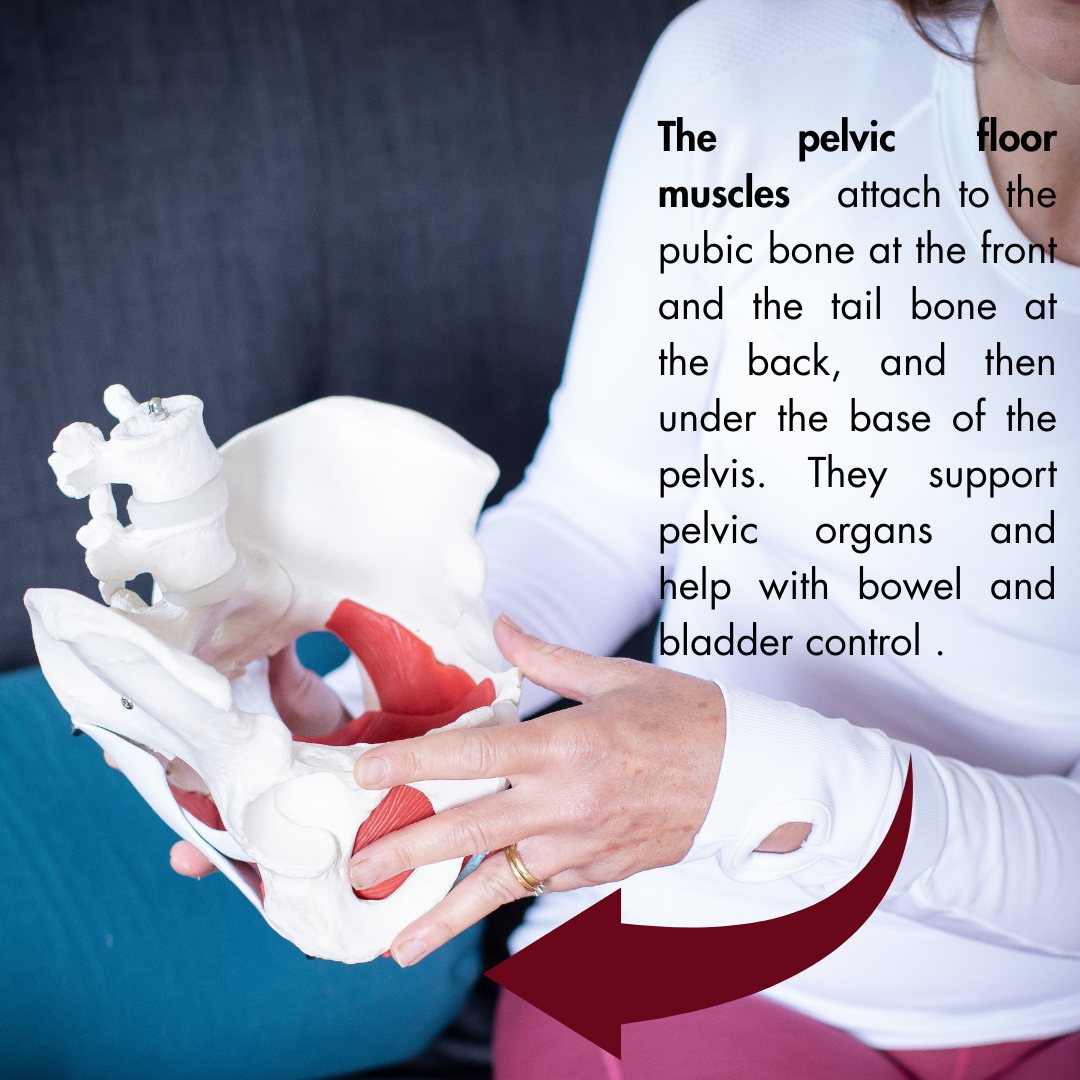
Problems with the pelvic floor are common, and may be more pronounced at times of change in women’s lives (e.g. childbirth, perimenopause). Structural changes from the pressures of pregnancy and childbirth contribute to weakness and prolapse, whilst the drop in oestrogen during menopause, alongside ageing, can mean the pelvic floor and tissues are not well lubricated and weaken.
Changes over a lifetime
There’s a model showing this: DeLancey’s lifespan of the pelvic floor function model shows how the pelvic floor can change over 3 distinct phases.

DeLancey’s illustration of how well the pelvic floor works over the life span. The symptom threshold - where problems are more perceptible - can move up or down depending on predisposing factors e.g. genetics, inciting factors e.g. childbirth and intervening factors e.g. hormonal changes, age.
But that’s only part of the story…younger women leak too.
One in 3 women over 60 have some incontinence, but leaking is far from an older ladies’ problem.
Urinary incontinence - leaking wee - is considered the most common pelvic floor problem in active females athletes, particularly those doing high impact exercise. Studies show over 60% of adult netballers, over 40% of female runners and nearly a third of rhythmic gymnasts are leaking. Most of this is associated with ‘stress urinary incontinence’ – involuntary leaking during physical activity. Some issues are related to weakness, but others are problems with control or even the ability to relax the muscles, which can get tight in the same way that other muscles do.
How do you know if you have pelvic floor problems or weakness?
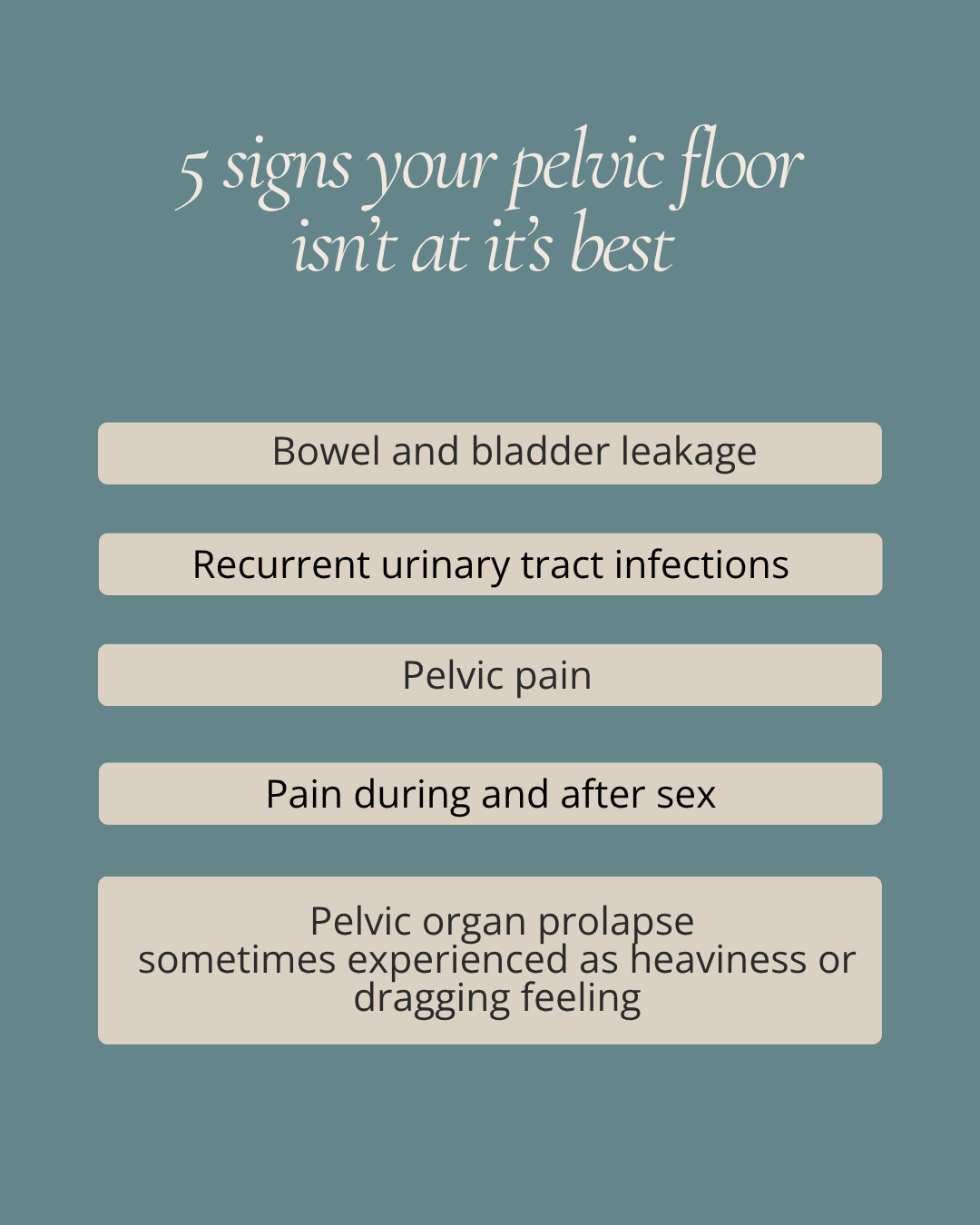
If you have these symptoms you should discuss them with a qualified medical professional. Pelvic health Physios can also help once you have been medically screened.
For more information on prolapse, see here.
What most women don’t know: the pelvic floor can be linked to solving your back, hip or leg problem
Why? It’s largely down to the basic structure and mechanics. If you feel you’ve tried everything to get your hip and back problems sorted and you’re still struggling, take notice of what’s happening with your pelvic floor.
Low back pain and the pelvic floor
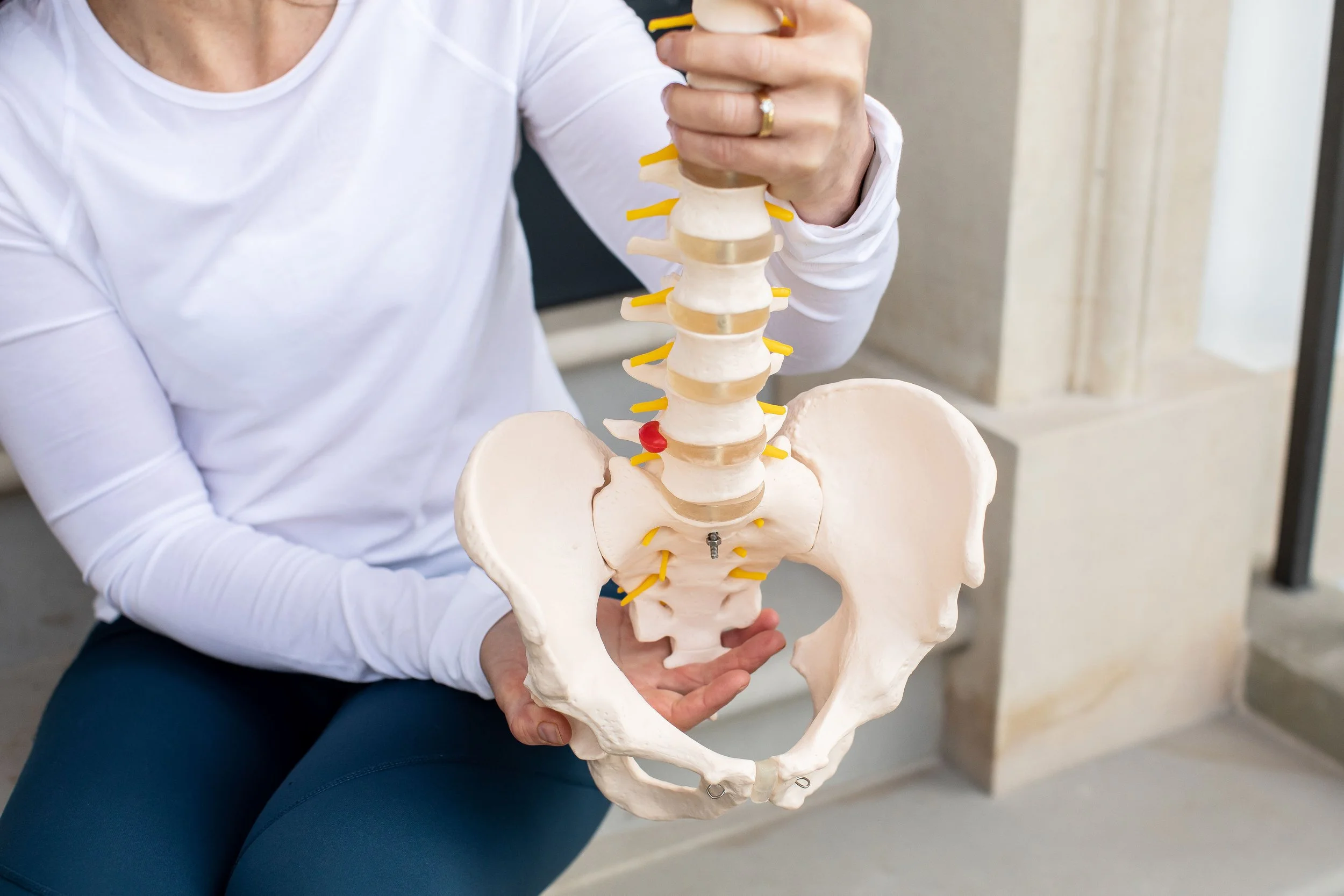
The lower back and pelvis are joined together at the base of the spine, and the pelvic floor literally forms the floor of the structures of the pelvis. It makes sense that if the support and strength from the structures at the base of the pelvis drops then the stability and control of the wider pelvis and lower back attaching to it will be affected and potentially put under greater strain.
Hip pain and the pelvic floor
There’s a deep structural connection between the hip and the stable foundation provided by the pelvic floor. The hip is formed by an articular rim (the acetabulum) and the thigh bone (femur). There’s also a muscle (obturator internus) that is intrinsically linked with the pelvic floor muscles, travelling from deep in the pelvis, across the back of the hip joint and then to the inner thigh bone. If there’s pelvic floor dysfunction, the hip muscles may not coordinate as well. Conversely, problems in deep hip muscles can impact incontinence, and training deep hip muscles, can help manage urine leakage. This is particularly true for those with hip osteoarthritis.
Conversely, if the lower back muscles, joints and discs are problematic and painful, this can make it hard to coordinate pelvic floor muscles and other pelvic muscles effectively. These effects can compound each other, making pain and problems worse.

Physios can help with back and hip pain that’s not going away and help uncover if the pelvic floor is part of the problem.
Hip pain and the pelvic floor
The hip and pelvic floor are inextricably linked, both in structure and how they work.
The hip joint is formed by the a rim in the pelvis (acetabulum) and the top of the thigh bone (femur). There is also a muscle (obturator internus) which runs from deep in the pelvis, across the back of the hip joint and to the inner upper thigh bone. Strong hip muscles will help a sore hip, but without a secure pelvic floor foundation and good abdominal function, it’s hard to maintain hip alignment and control.
If you feel you’ve tried everything to get your back problems and hip problems sorted and you’re still struggling, take notice of what’s going on with your pelvic floor. Do you have pain, leakage or problems there? Addressing these issues can be the key to overcoming pain.
Musculo-skeletal and sports Physios (like me) can help you with the interplay between pelvic floor weakness and back, hip and leg problems and what to do to solve it. If you think you have pelvic floor symptoms alongside hip and lower back problems, discuss it with your Physio. It’s natural to feel a little shy about this, but we’re here to help and used to it. Make notes beforehand so if you get nervous discussing symptoms you have the information to hand.
If you have low back pain and want to solve it, join our upcoming Masterclass. Online and recorded.
References:
Cardoso Campos, N. et al. Inefficient impact absorption and reduced shock attenuation in female runners with stress urinary incontinence. J.Biomech 20205 10.1016/j.jbiomech.2025.112753
Cooke R, Papadopoulou T, Weir A, Donnelly GM. Hiding in plain sight: the pelvic floor in hip and groin pain. British Journal of Sports Medicine. 2026;60(2):88.
DeLancey et al. Graphic Integration of Causal Factors of Pelvic Floor Disorders: An Integrated Lifespan Model. Am J Obstet Gynecol 2008 Jun 4;199(6):610.e1–610.e5. doi: 10.1016/j.ajog.2008.04.001
Foster SN et al.Hip and pelvic floor muscle strength in women with and without urgency and frequency-predominant lower urinary tract symptoms. J Womens Health Phys Therap. 2021 Jul-Sep;45(3):126-134
Hartigan E et al. Pelvic floor muscle performance, hip mobility, and hip strength in women with and without self-reported stress urinary incontinence. J Womens Health Phys Therap. 2019;43(4):160-170.
Gram MCD, Bø K. High level rhythmic gymnasts and urinary incontinence: Prevalence, risk factors, and influence on performance. Scandinavian Journal of Medicine & Science in Sports. 2020;30(1):159-65.
Giagio S, Salvioli S, Innocenti T, Gava G, Vecchiato M, Pillastrini P, et al. PFD-SENTINEL: Development of a screening tool for pelvic floor dysfunction in female athletes through an international Delphi consensus. British Journal of Sports Medicine. 2023;57(14):899
Gill N, Lin K-Y, Whitford E, Jeffrey S, Frawley H. The prevalence of urinary incontinence in nulliparous and parous adult netball players. Continence. 2025;13:101753.
Hodges PW et al. Insight into the function of the obturator internus muscle in humans: observations with development and validation of an electromyography recording technique. J Electromyogr Kinesiol. 2014 Aug;24(4):489-96.
McKeever H. Chapter 9 - Differential diagnosis—Is it the pelvic floor, the hip, or the groin? In: Donnelly GM, editor. Sports Medicine and the Pelvic Floor: Academic Press; 2026. p. 221-40.
Pires, T et al. Prevalence of Urinary Incontinence in High-Impact Sport Athletes: A Systematic Review and Meta-Analysis. J Hum Kinet 2020 Jul 21;73:279–288. doi: 10.2478/hukin-2020-0008
Tuttle, L et al The role of the obturator internus muscle in pelvic floor function. Journal of Women's Health Physical Therapy, 2016; 40(1):15-19.