Faster diagnosis, streamlined treatment - essentials for osteopenia and osteoporosis
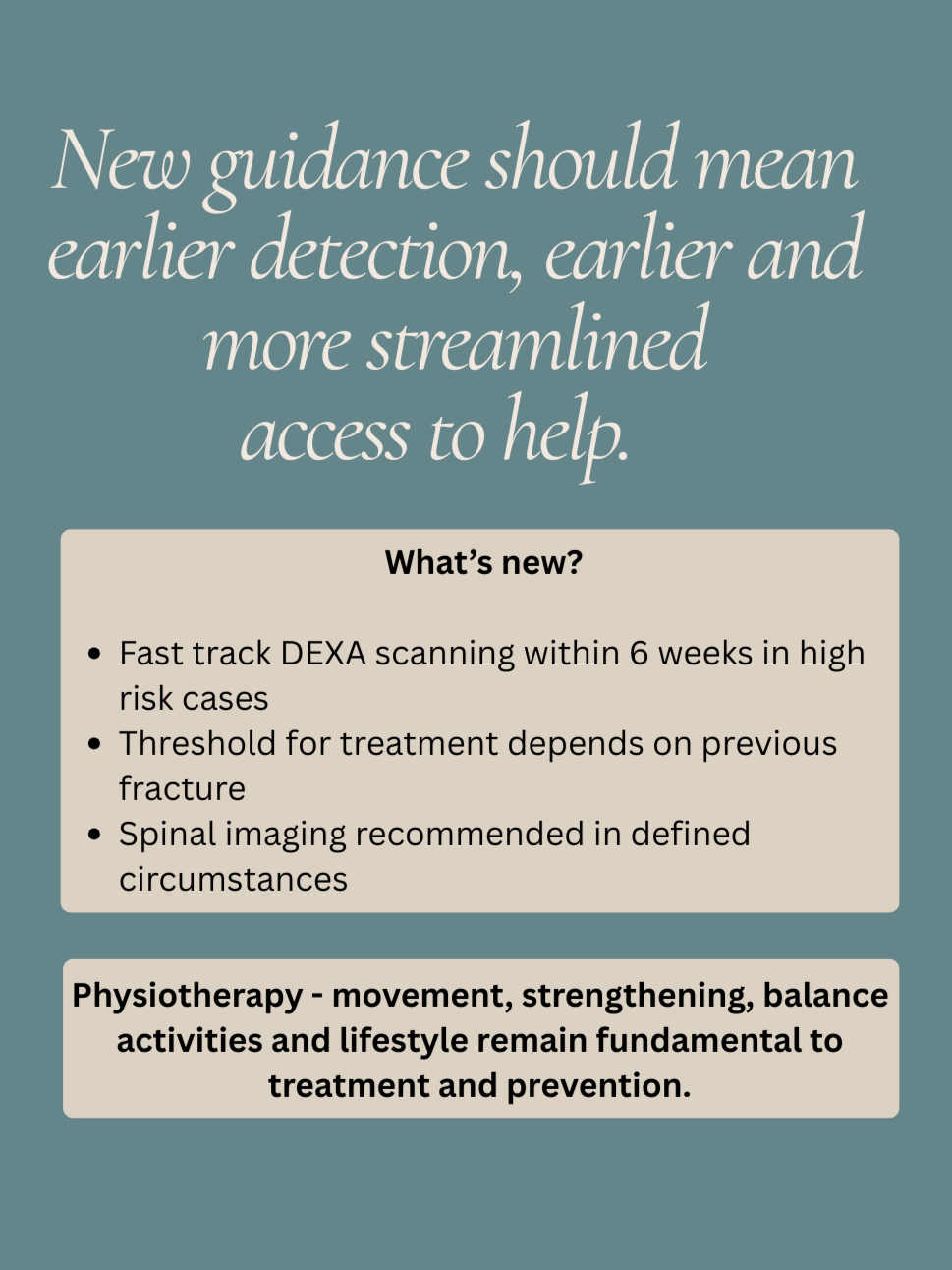
NICE, the National Institute for Health and Care Excellence, have just updated their guidance on how to diagnose bone health problems (July 2026). With one in 2 women over 50 likely to experience an osteoporotic fracture in their lifetime, it’s vitally important to get faster diagnosis and credible advice on prevention and treatment. Falls resulting in fracture can leave women less mobile and in pain. They’re not just a leading cause of loss of independence - osteoporotic hip fractures are linked with a significantly increased risk of death. So what’s new?
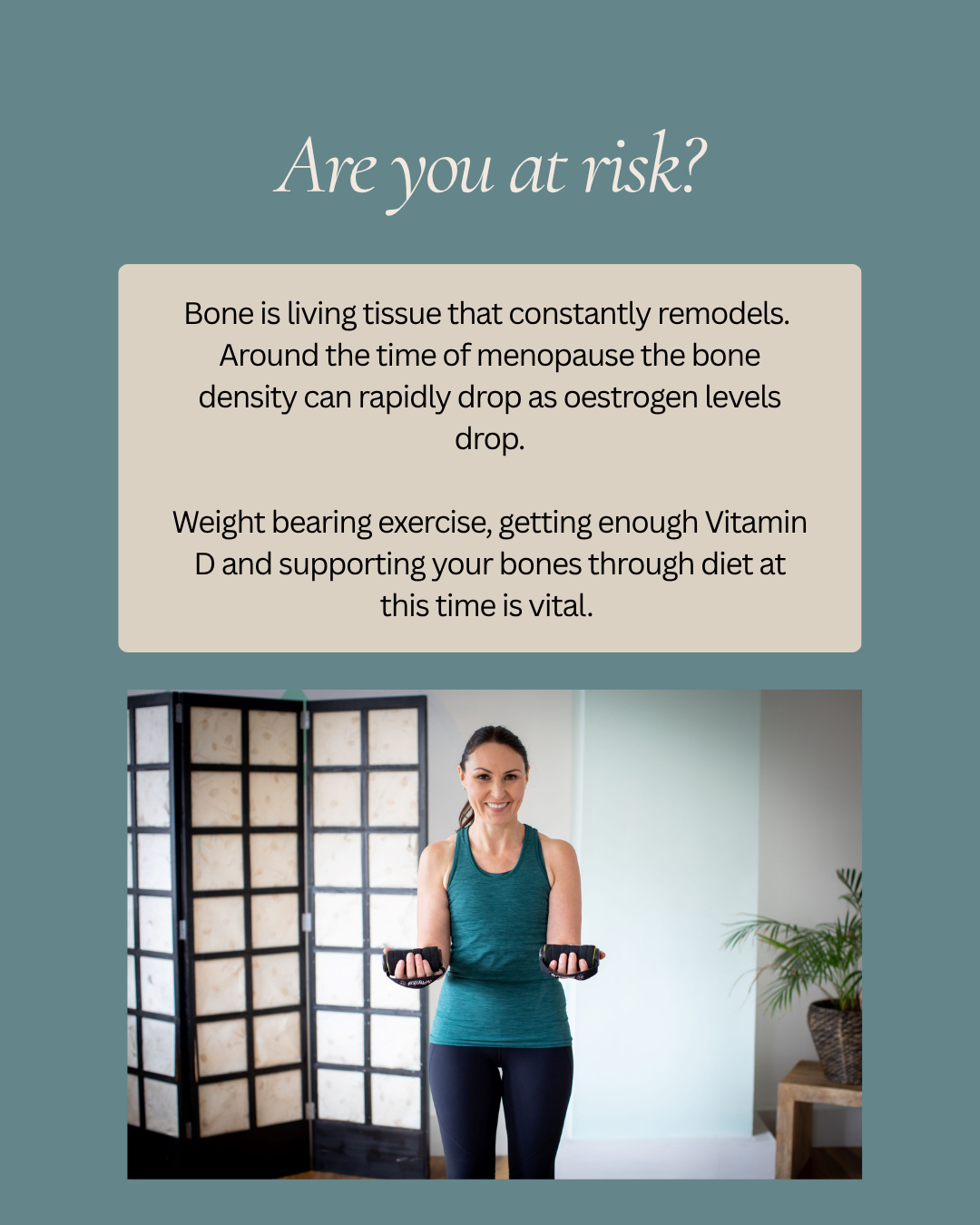
Bones are living tissue that constantly remodels. With the loss of oestrogen in menopause, women are especially at risk of bone density loss in the first 5-7 years post menopause, and can lose up to 20% of their bone density if steps are not taken to maintain it.
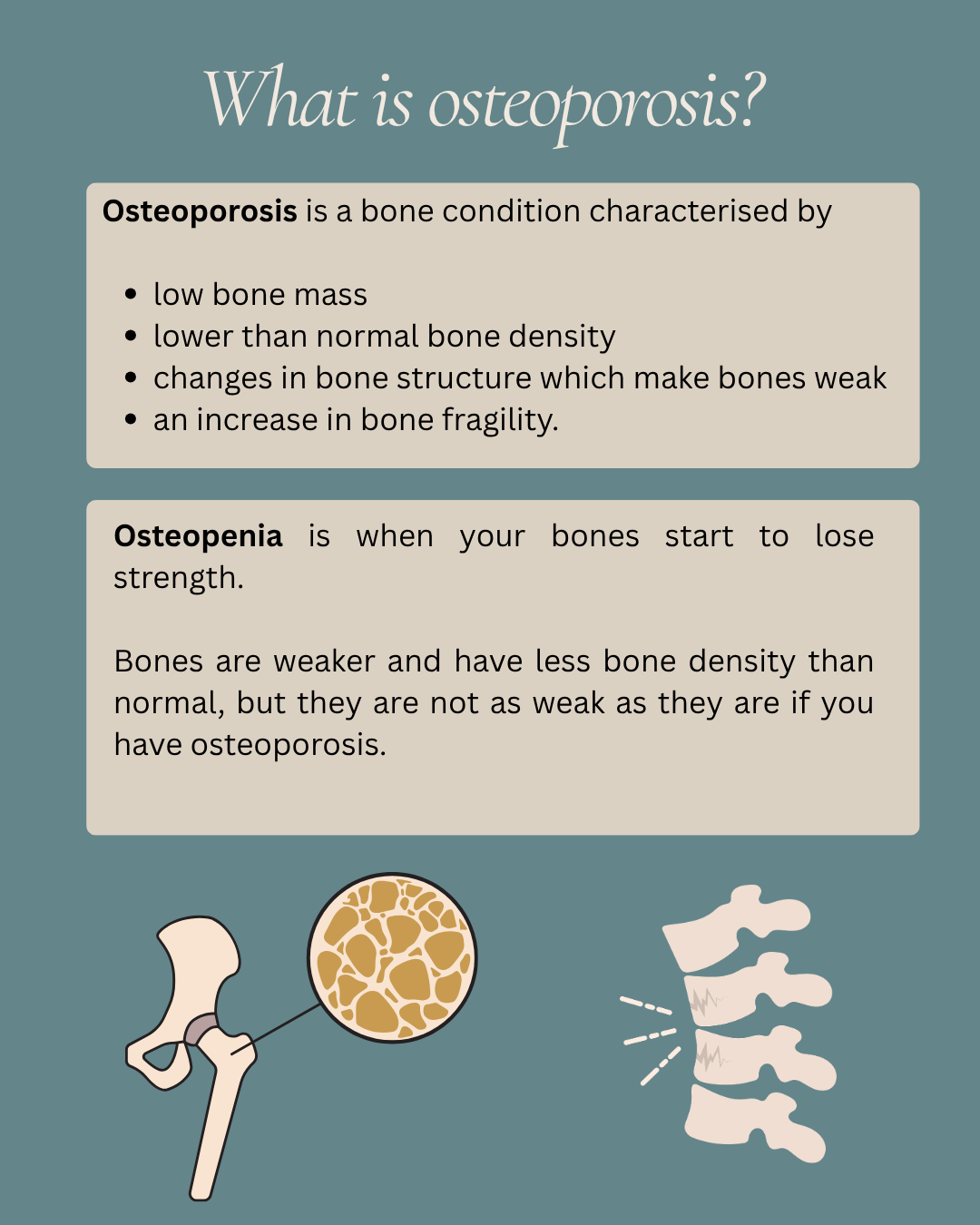
How do you know if you have thinning bones?
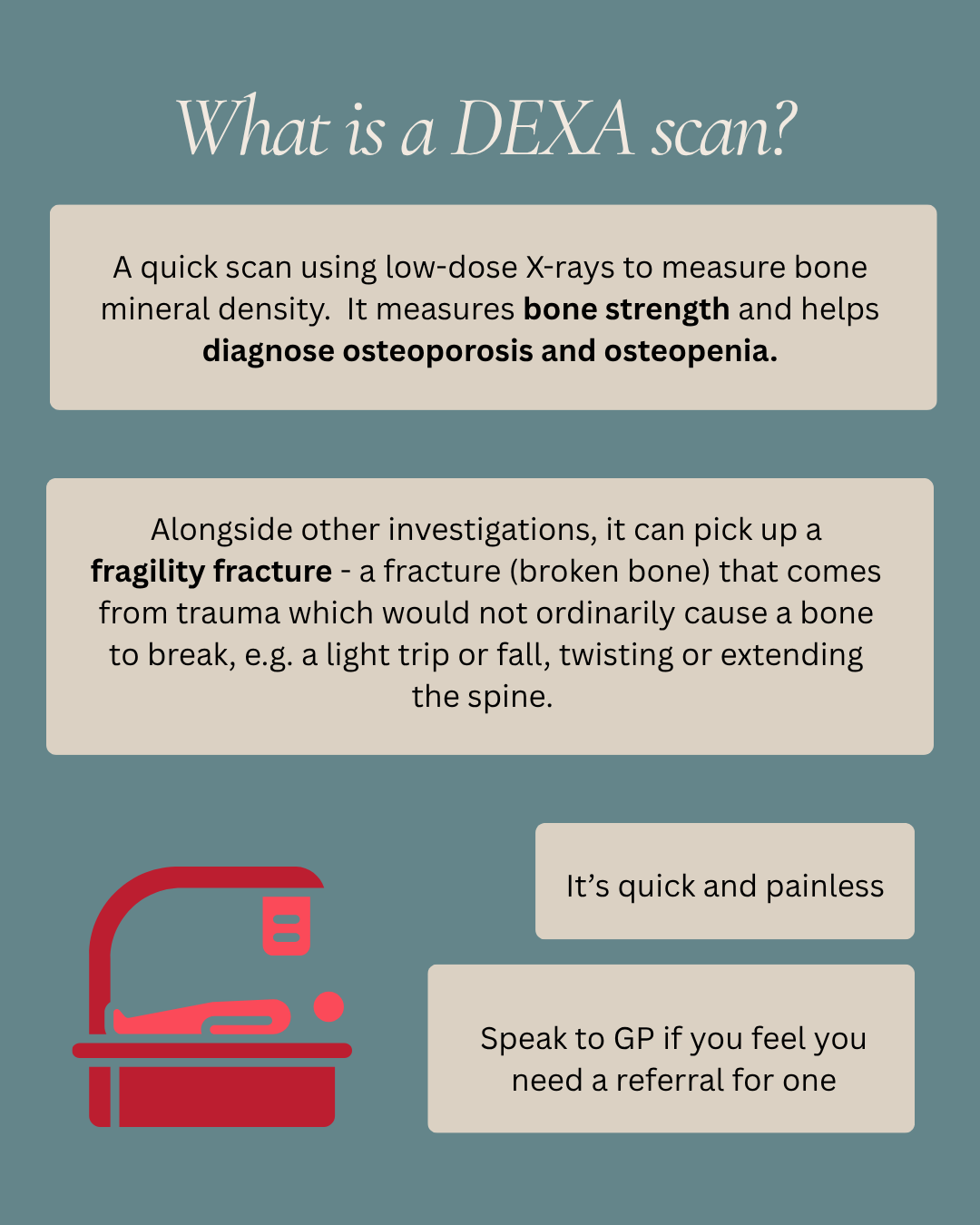
Detection is via a DEXA scan.
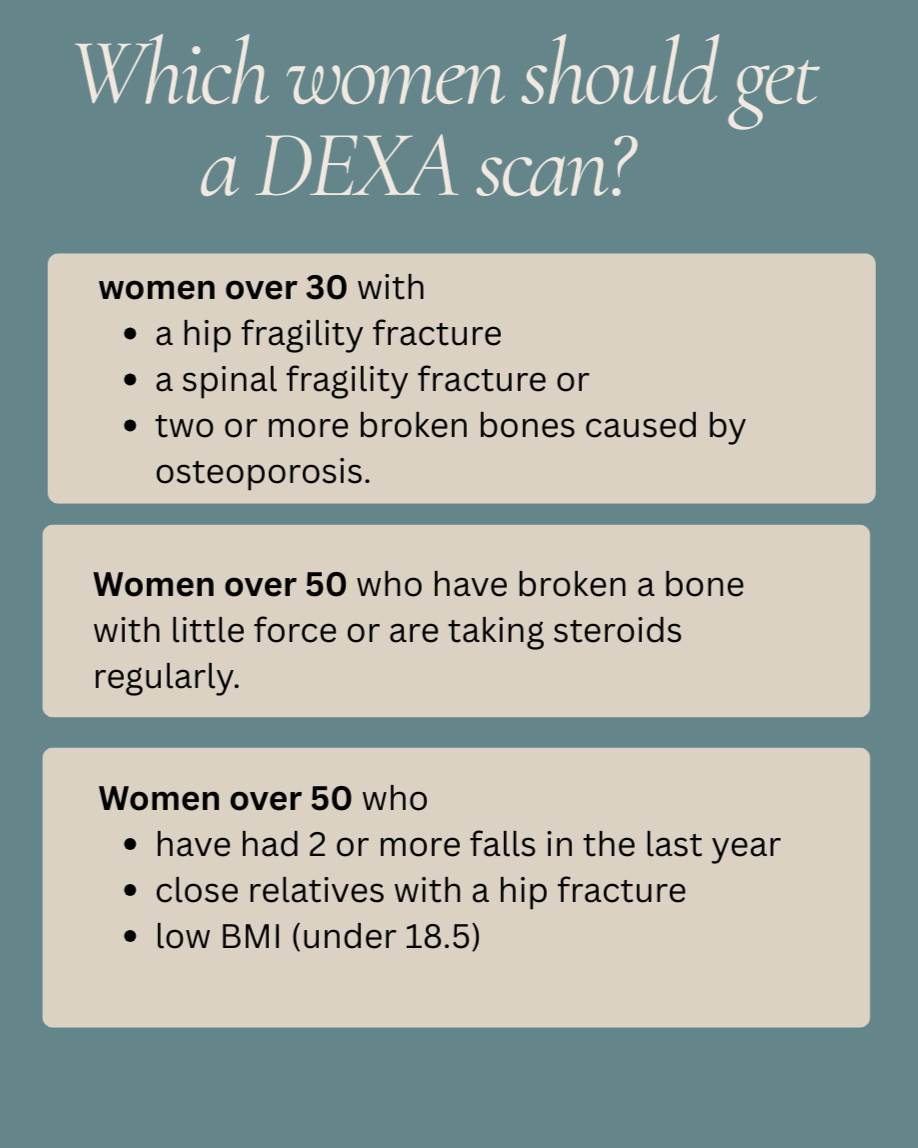
Who can get a DEXA scan on the NHS?
The main criteria is set out below. You can also access one privately if you have concerns but don’t meet the thesholds.
How menopause affects your bone strength and density
I had an early menopause and/or a hysterectomy where my ovaries were removed. Should I be assessed for fracture risk?
Yes, this qualifies. The premature drop in oestrogen puts you at risk, as do some other medical conditions listed here.

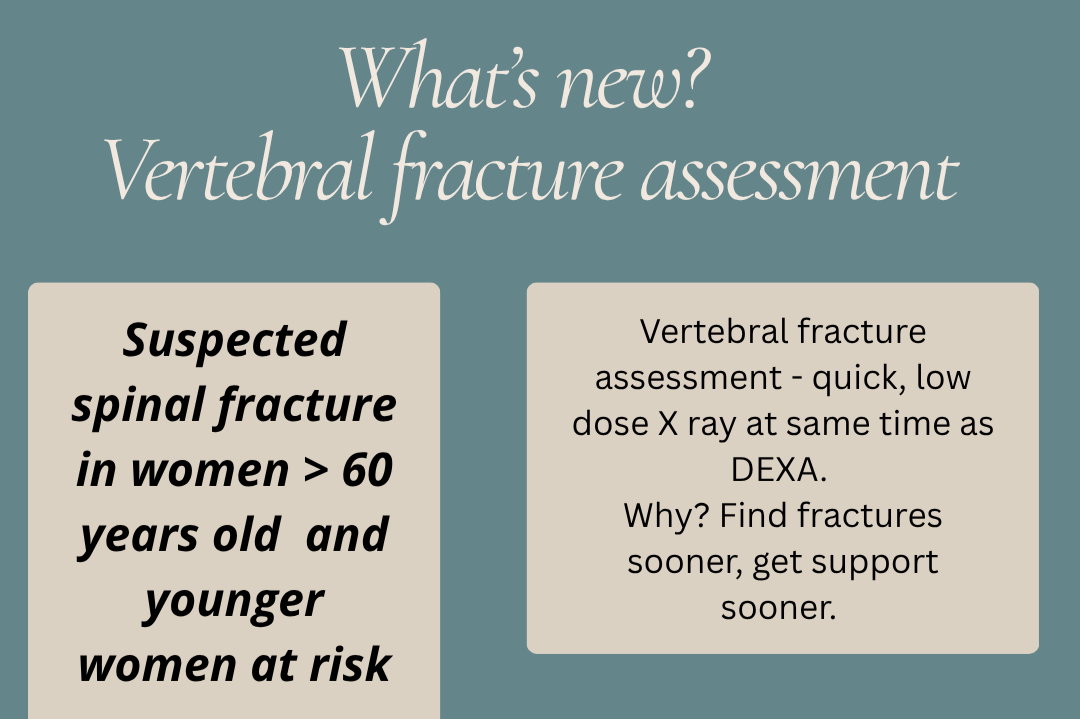
Spinal XRays to detect bone health problems have not been used as frequently in recent years, but they’re not recommended to help find fractures and get help sooner.
Why a Physio who understands women’s bones and bodies is essential for women with Osteopenia and Osteoporosis
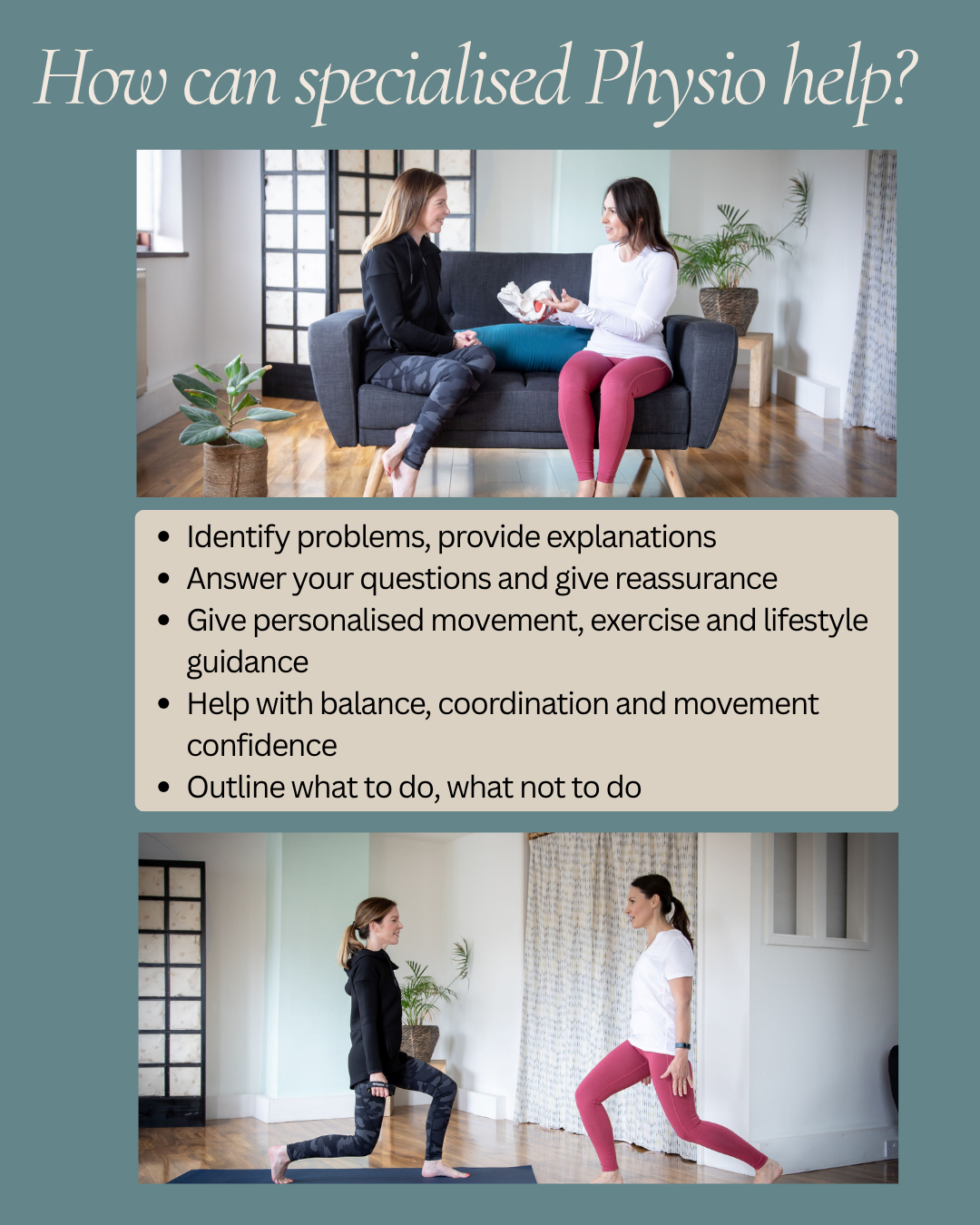
If you want help understanding your diagnosis, knowing what to do, what not to do and how to strengthen and manage pain, I can help. Click the link here to contact me.