Osteopenia and Osteoporosis: your essential tool kit
Strong, steady, straight - this is the recent catchy strapline for the UK consensus statement on physical activity and exercise for osteoporosis. It’s a great mantra to use when thinking about which exercises are really going to help support stronger bones. Osteoporosis is a condition where there there are changes in bone structure and a significant loss pf bone strength and density. Osteopenia is the stage prior to osteoporosis. In osteopenia, the bone density is below the normal range for a young adult, but not severe enough to be diagnosed as osteoporosis.
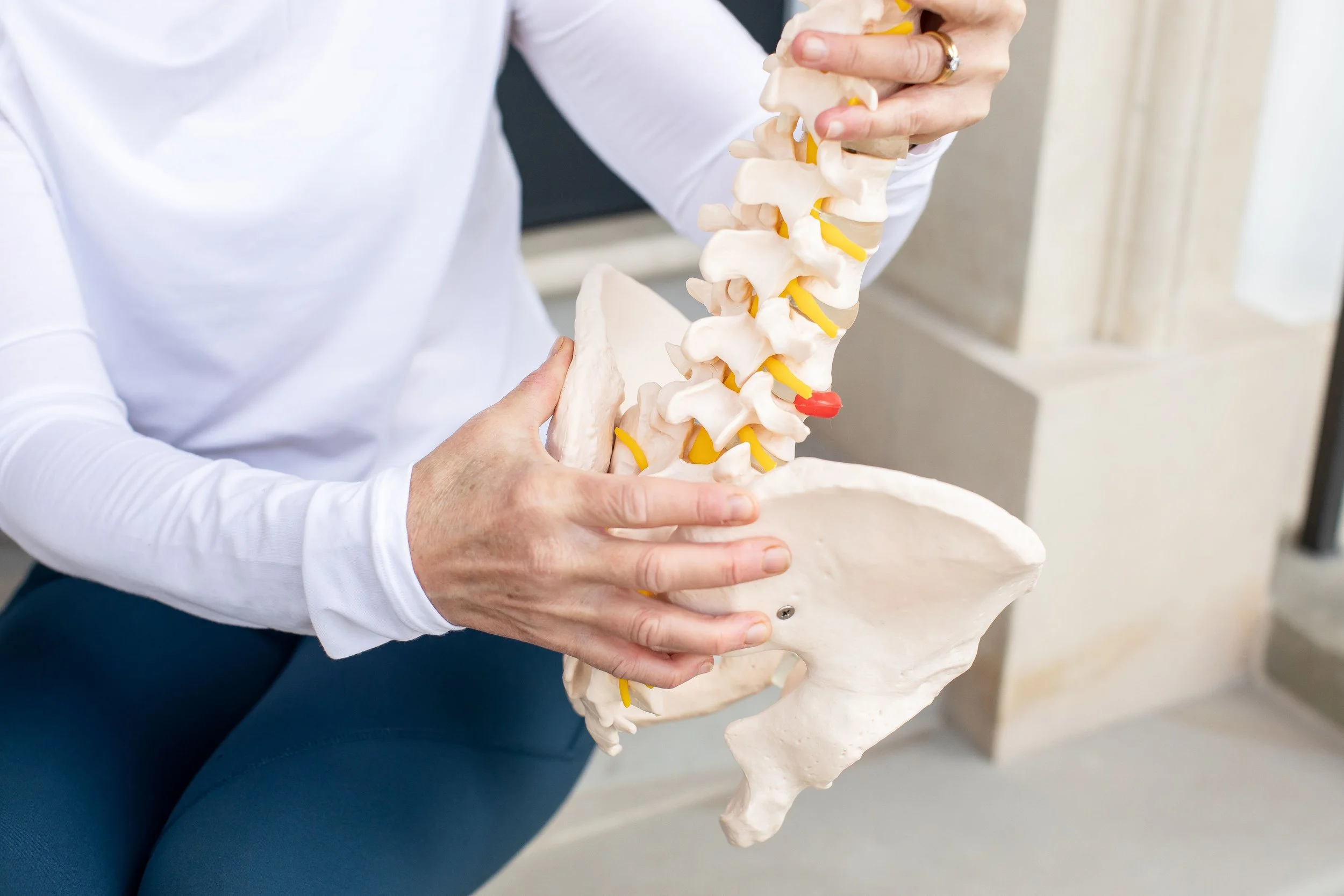
Worries about fragile bones, risk of fracture and new diagnosis can be anxiety inducing. It’s also a big societal problem - it’s a major cause of hospital admissions, and, to quote the Royal Society of Osteoporosis, cruel in the way it targets women. The combination of increasing age and the drop in oestrogen in peri and post menopause (crucial for healthy bone remodelling) means that women are more susceptible to these conditions, especially once they are 50+.
What happens to women’s bones across the life span?
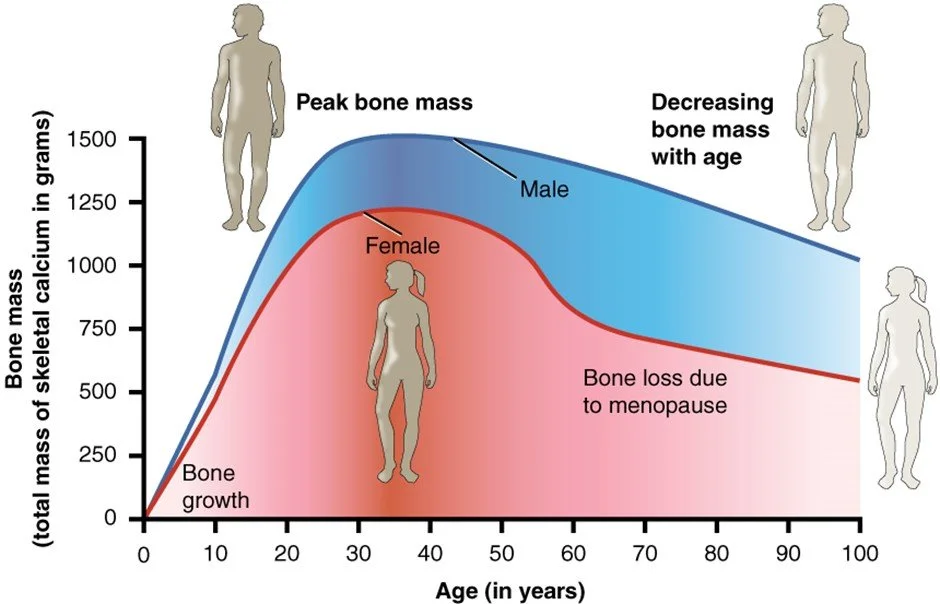
Bone mass builds from early in life, peaking in our late 20s. It remains fairly steady through our 30s and early 40s, then drops off with hormonal changes and increasing age from the time of mid to late perimenopause.
Ref: https://pressbooks.library.vcu.edu/biol217vcu/chapter/9a-bone-health-intro/
Scans and free online tools to give you the full picture
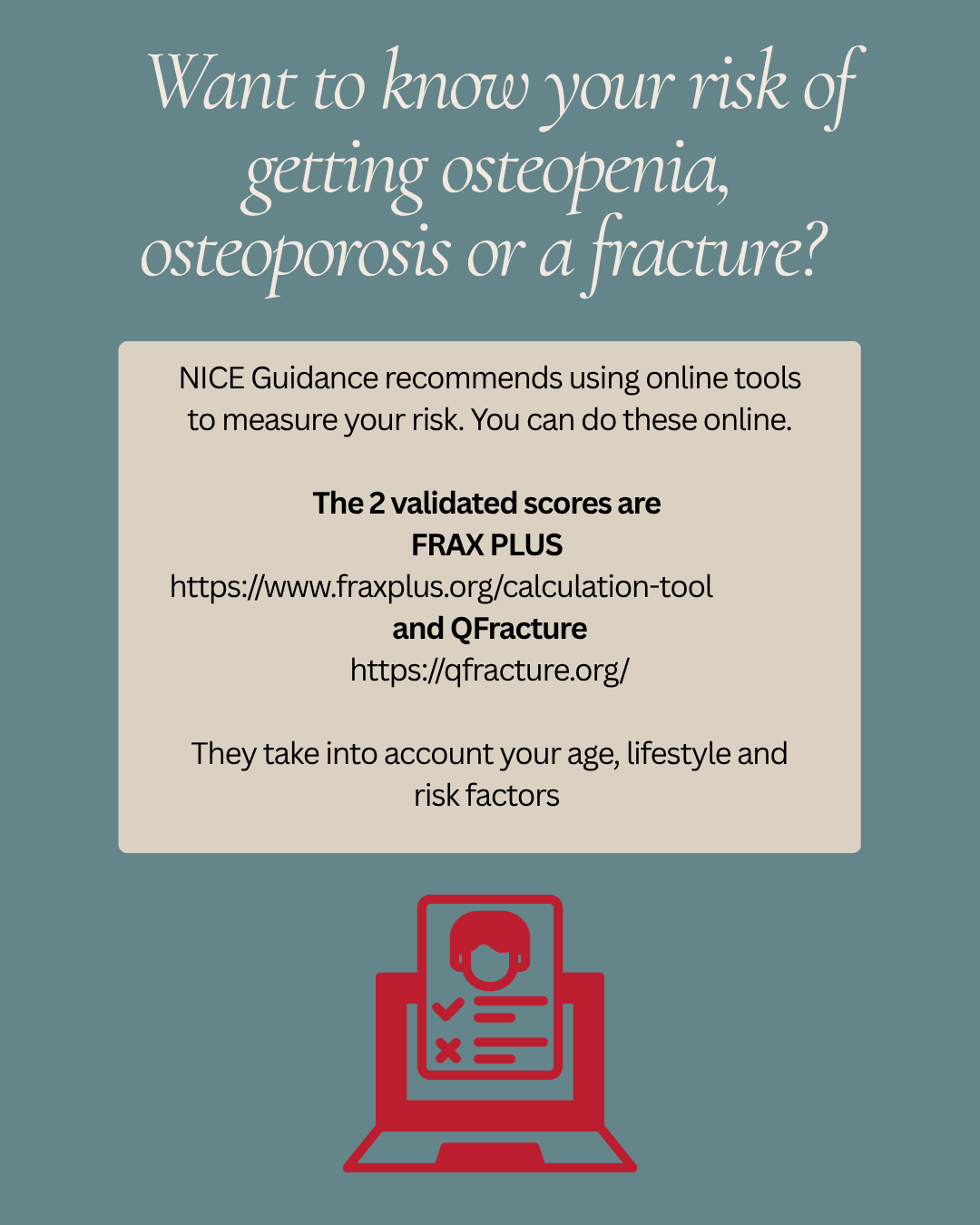
Bone mineral density is generally measured with a DXA/DEXA scan. The results give you a score, but don’t tell the full picture. If you want to do an online, personalised check of your bone health without going through the scanner, you can do the FRAX plus score and the QFracture score. These are used by medical practitioners, clinicians and the public and help put your bone health in context. They can tell you what your fracture risk is, and give you a realistic picture of what risk factors you might have, whether they are something you can impact (e.g. alcohol consumption, smoking).
Click on the buttons below to learn more.
Thinking of going to the GP to see if you need a DXA/DEXA scan?
If you know you have some issues which might put you at risk of osteopenia or osteoporosis, such as a strong family history, early menopause or a fracture that’s not in proporition to the bump or fall which caused it, then it’s worth doing the FRAX plus and Great British bone check before you go, and have the results with you.
The Royal Osteoporosis Society have a great resource to hand hold you through approaching your GP about bone health.
Strong, Steady, Straight
Staying strong with weight bearing and resistancee exercises, adding impact where you can, staying steady wtih specialised dynamic exercises and doing specialised postural work ie essential to managing bone health not just for now, but for the future.
Chartered Physiotherapists can help support you with a personalised strengthening, balancing and postural control programme to help bones stay more resilient and avoid slips and falls. Get in touch with me if you are interested in having a review and a bespoke programme. I’m available in person or online.
The latest NICE guidance on Osteoporosis was updated in July 2026. For the latest in what’s changed and what you need to do, see my blog.
REFERENCES:
Brooke-Wavell K, Skelton DA, Barker KL, et al. Strong, steady and straight: UK consensus statement on physical activity and exercise for osteoporosis. British Journal of Sports Medicine 2022;56:837-846.
Compston J , Cooper A ,Cooper C , et al. .UK clinical guideline for the prevention and treatment of osteoporosis.Arch Osteoporos2017;12:43.doi:10.1007/s11657-017-0324-5 pmid:http://www.ncbi.nlm.nih.gov/pubmed/28425085
Watson SL , Weeks BK , Weis LJ , et al. .High-intensity exercise did not cause vertebral fractures and improves thoracic kyphosis in postmenopausal women with low to very low bone mass: the LIFTMOR trial.Osteoporos Int2019;30:957–64.doi:10.1007/s00198-018-04829-zpmid:http://www.ncbi.nlm.nih.gov/pubmed/30612163
Zheng, B et al. Recent advances in mechanisms and rehabilitation strategies of exercise iinterventions for osteoporosis in older adult women. Front Physiol . 2025 Sep 24;16:1631817. doi: 10.3389/fphys.2025.1631817