When pain causes you to miss social occasions, work and holidays, solutions are essential. As a Physio and lover of anatomy and physiology, I naturally look there for answers, but it’s not always as simple as identifying a damaged body part and doing exercises. That’s not to dismiss diagnosis - that’s fundamental - but pain can be persistent and the reasons for persistence, frequency and intensity can be complex.
Of course, there are often underlying biological factors - injuries, inflammed joints, muscle tears, damaged tendons, pressure on a nerve or broken bones, torn ligaments and physical conditions. How our body and mind react to pain, how we cope with it and what we do has an enormous bearing on persistent pain. What we actually feel is more complex, and understanding this and reframing it helps resolve it.
Pain and the active female: why it’s different
Recent research shows that mental and wider health, social and cultural factors, gynaecological health, hormonal changes and stage of life all impact women’s perception of pain.
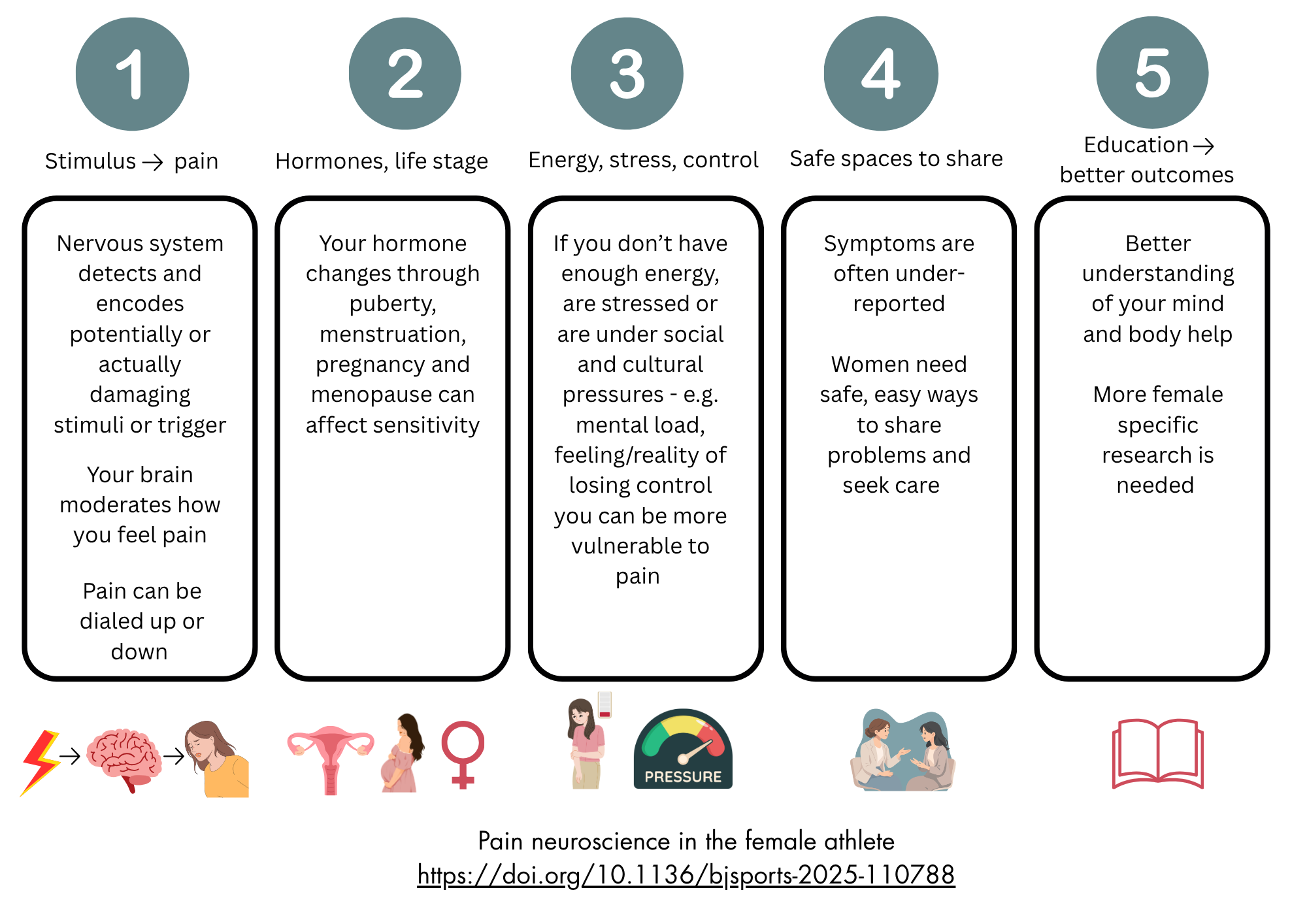
More broadly, pain and stress can mutually reinforce each other. How the pain continues to manifest, or not, is far more complex.
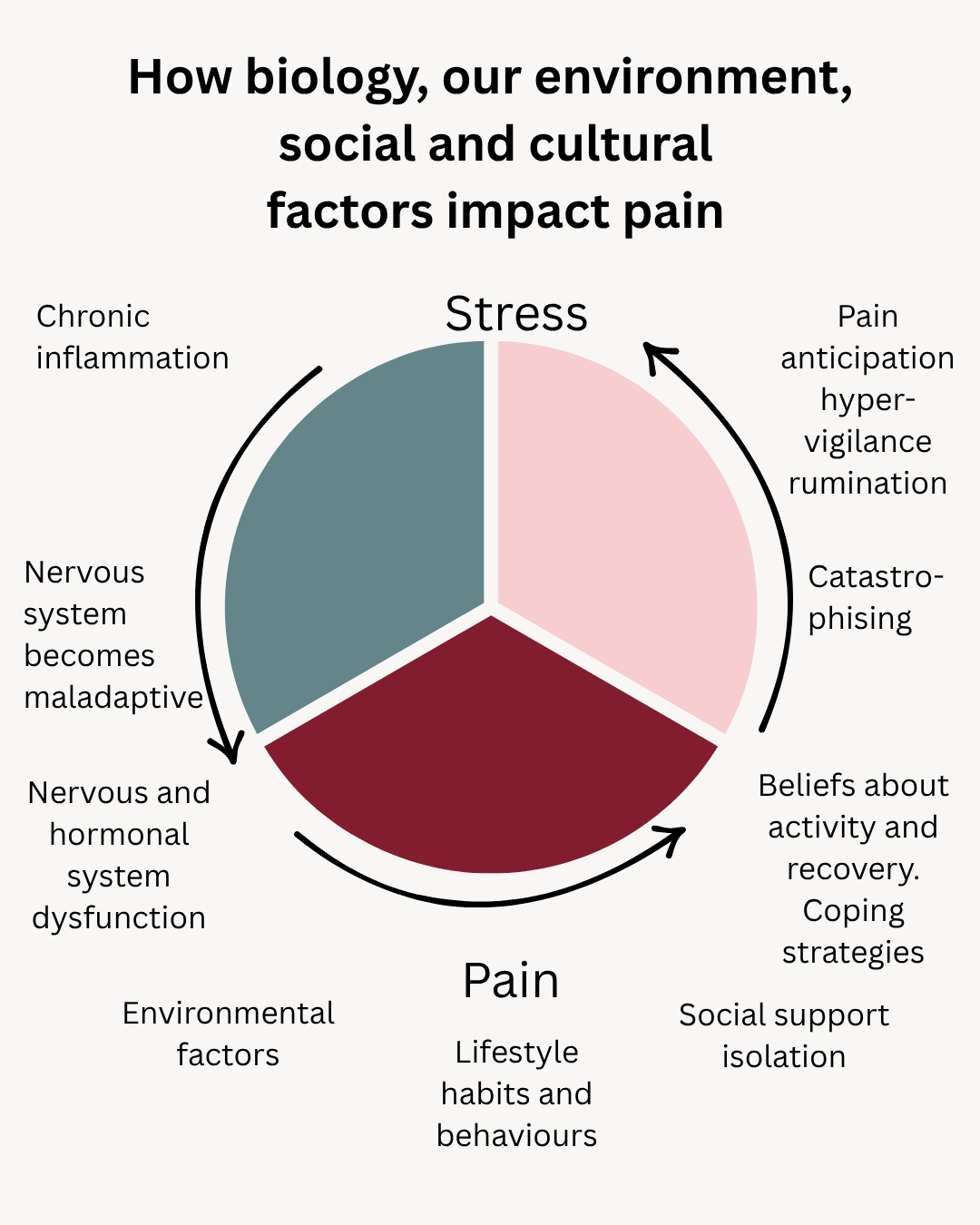
We can intervene: considering how we react to pain, belief systems, how we move, act and cope, our lifestyle and the people and world around us have an immense impact.
An important self reflection: How do you cope with pain? Is your coping style helping?
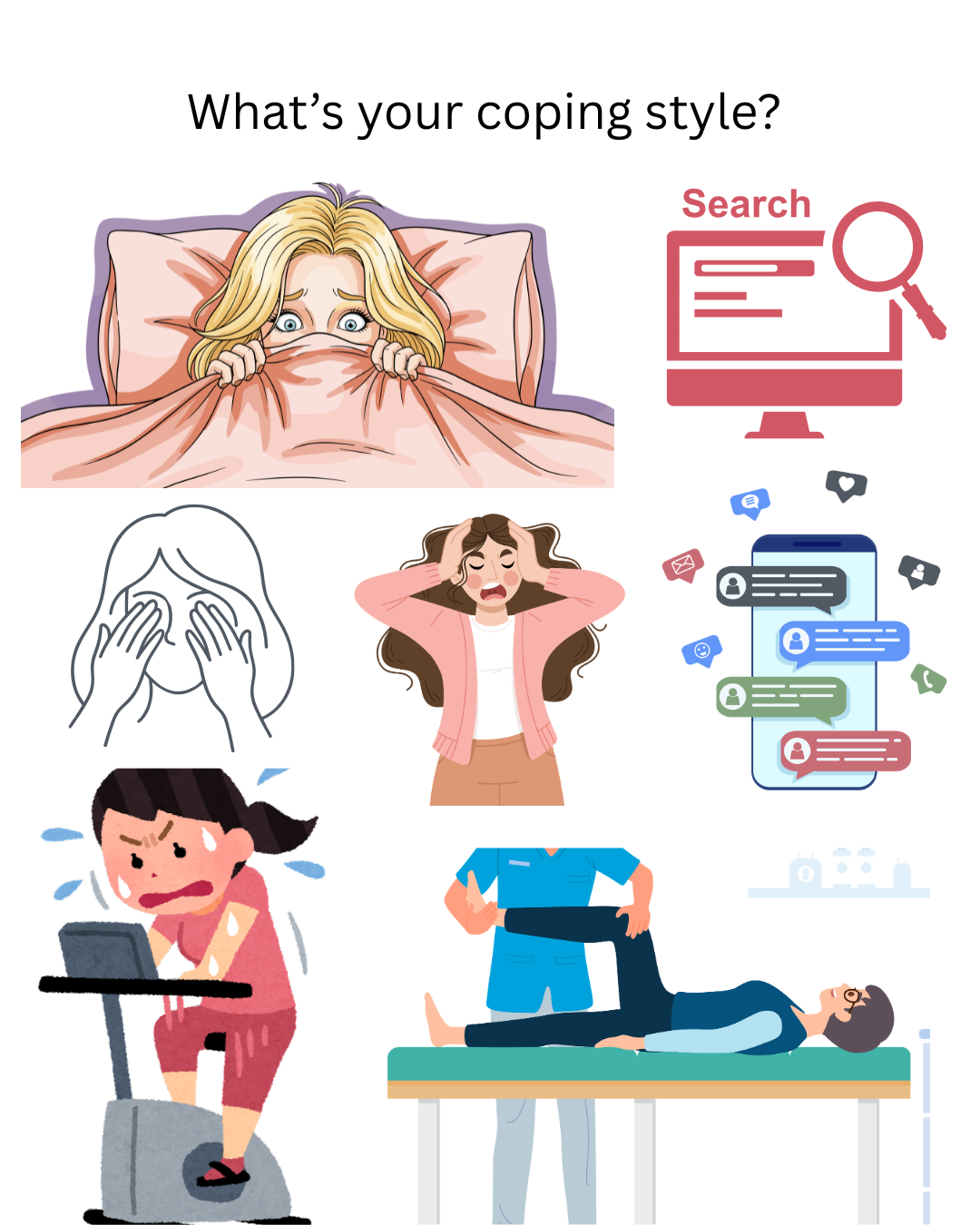
It’s worth thinking about what coping style you have when it comes to pain and if it’s really serving you well. How do you react? There’s no judgement here, or rights and wrongs. Whether it’s taking to your bed and pulling the covers over your face, searching google at 3am, asking friends, neighbours and social media for advice, doubling down on exercise and repeating the ‘no pain, no gain’ or seeking clinical help, there’s a chance you’ve done it. We all have.
Knowing your default response to pain and considering if it’s helpful is what counts. What is certain is that understanding your pain, credible information and support and not aggravating it repeatedly beyond a mild level helps.
5 things we know help manage pain
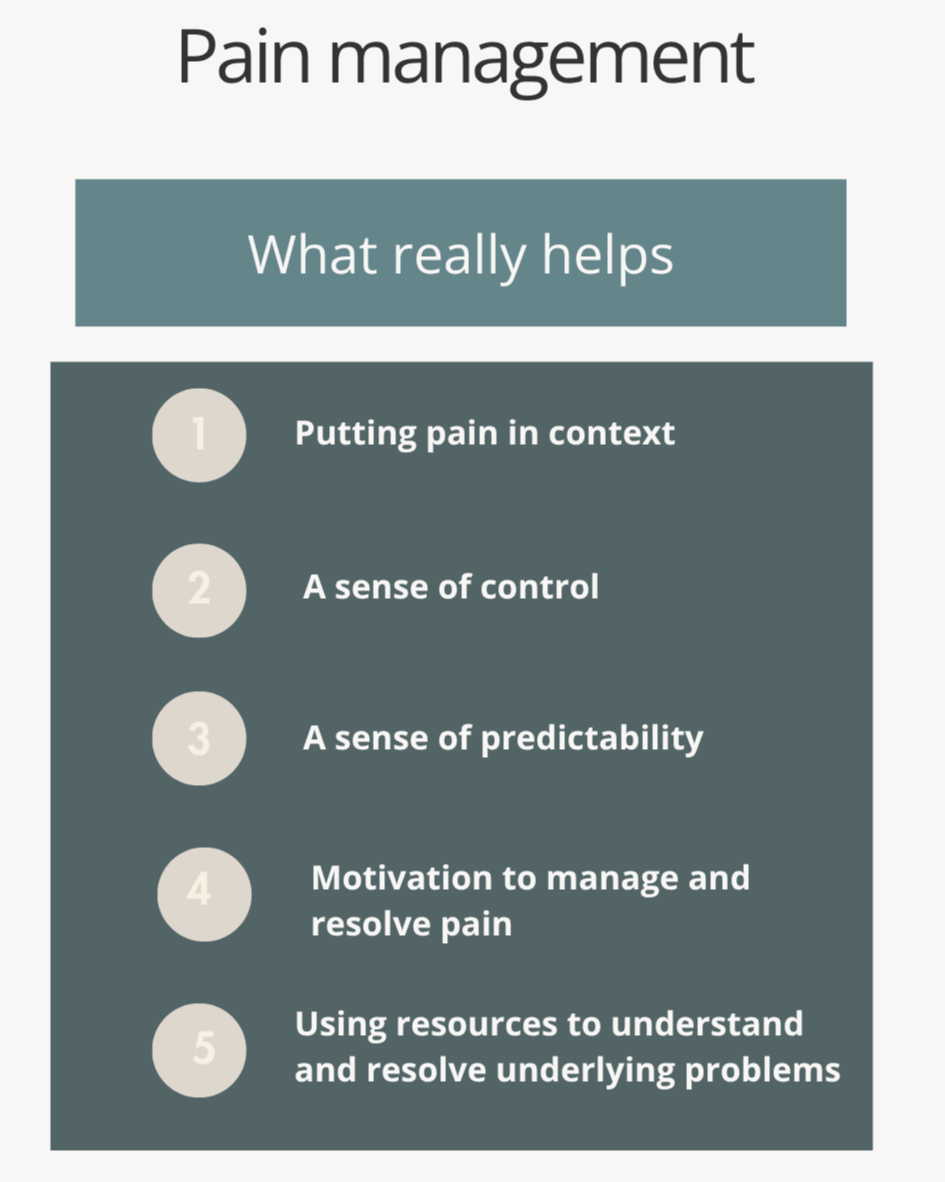
Putting pain in context. The unknown can be scary, and understanding the potential causes can help. Health care professionals can provide diagnosis and guidance. De-catastrophising and a course of action helps.
Harnessing your nervous system, control and predictability. Our nervous system can help or hinder us. If we perceive a threat, our sympathetic nervous system drives the "fight-or-flight" response: useful if the threat is imminent and profound, problematic if it’s persistent and disproportionate. Knowing triggers and managing your lifestyle builds a sense of control, predictability and an essential sense of trust in your body.
Maintaining motivation, curiosity and resourcefulness . Actively seeking information and treatment from credible sources is empowering. Stay curious but avoid going down the rabbit hole of getting advice from numerous, conflicting sources.
References
Blandhol, M. et al. 2026. Rethinking coping in chronic pain: a systematic review and dynamic interaction model of coping. Pain Reports. 17;11(2):e1421. doi: 10.1097/PR9.0000000000001421
Aboushaar, N, Serrano, N. 2024. The mutually reinforcing dynamics between pain and stress: mechanisms, impacts and management strategies. Front Pain Res (Lausanne) Nov 18;5:1445280. doi: 10.3389/fpain.2024.1445280
Holmes, S. et al. 2026. Pain neuroscience in the female athlete. https://doi.org/10.1136/bjsports-2025-110788
Sisay Nigru, A. et al. 2026. Organization of coping strategies and their proximal associations with pain intensity in spinal pain patients. Frontiers in Pain Research doi: 10.3389/fpain.2026.1824864
Sullivan PB et al. 2018. Cognitive Functional Therapy: An Integrated Behavioral Approach for the Targeted Management of Disabling Low Back Pain. Phys Ther 1;98(5):408-423. doi: 10.1093/ptj/pzy022